The canoe makes almost no sound. A man stands at the back with a long wooden pole and pushes us through a channel barely wider than the boat. Reeds lean in on both sides. Purple water lilies sit open on dark water, and a storm is gathering over Lake Victoria.
Then the pole stops moving. Nobody speaks. In the grass ahead, two grey shapes stand so still they could be tree stumps, until one of them turns its head and looks straight at us.
“Today we are very lucky. We have seen two shoebills.”Our Mabamba guide
A swamp at the edge of a lake
Mabamba is a long, narrow bay on the northern shore of Lake Victoria, a short drive from Entebbe. Papyrus fringes the water, and the open lake waits beyond. It is officially the Mabamba Bay Wetland System, protected since 2006 as a Ramsar wetland of international importance and covering 2,424 hectares.
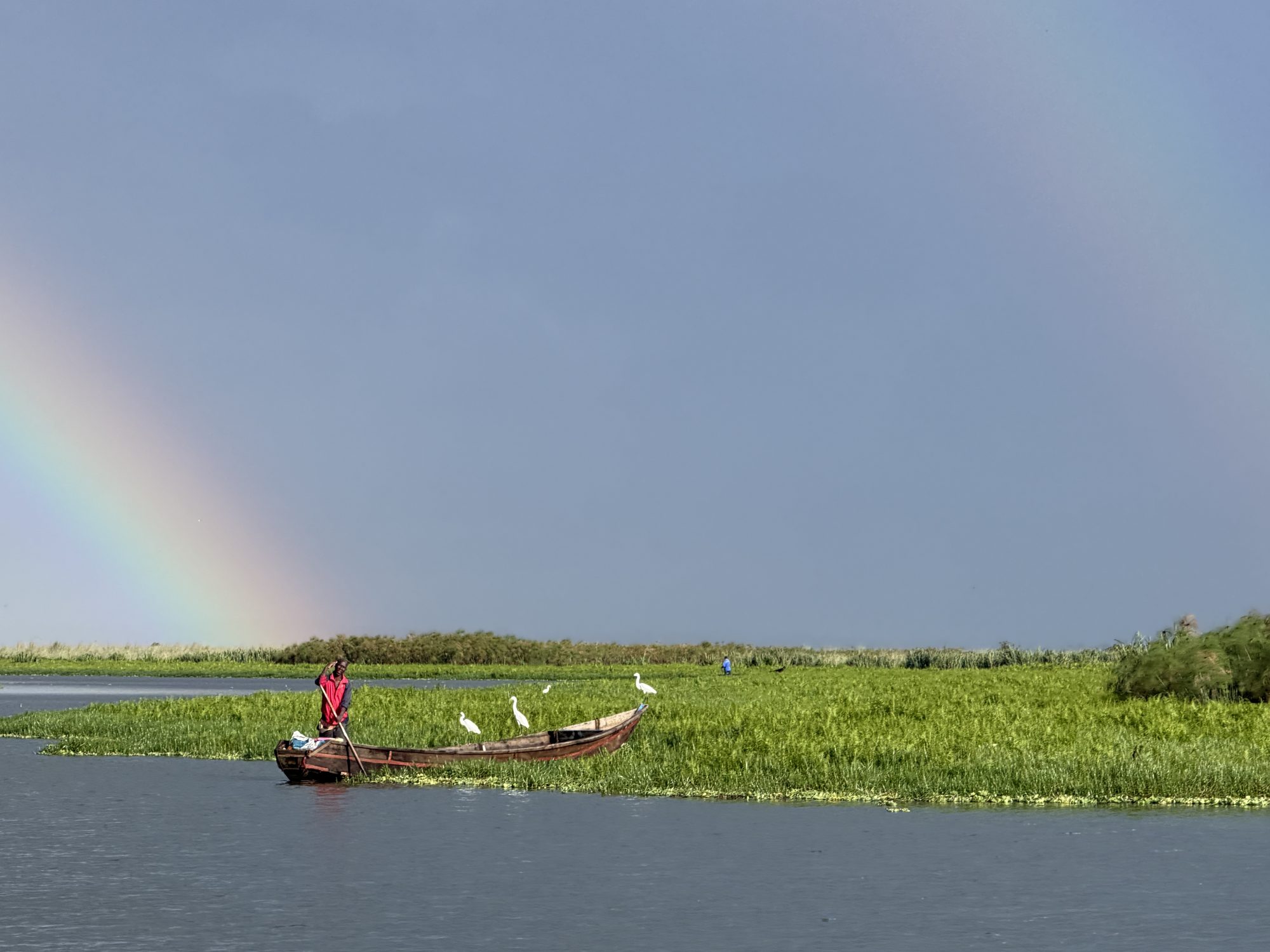
It is not empty water. The Ramsar listing records close to 190,000 birds using the wetland on average. It also holds the papyrus yellow warbler and sitatunga, the shy, water-loving antelope of the swamps.
The only way in is the way the fishermen go: by boat, along channels that open and close with the seasons.
The bird that waits
The shoebill is built for patience. It can stand without moving for hours, watching the water for a lungfish to rise. Then it falls forward onto its prey with its whole body, that enormous bill first.
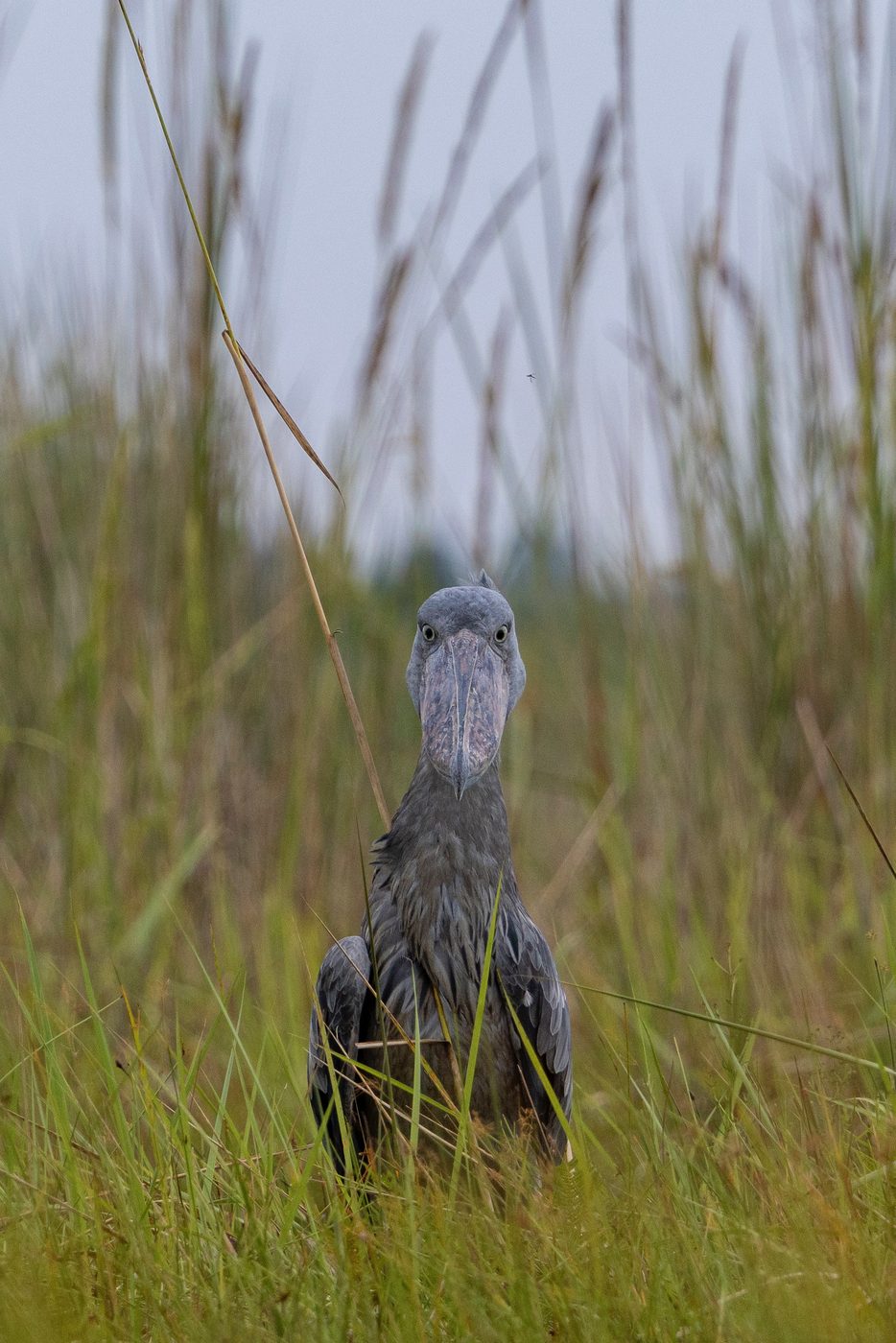
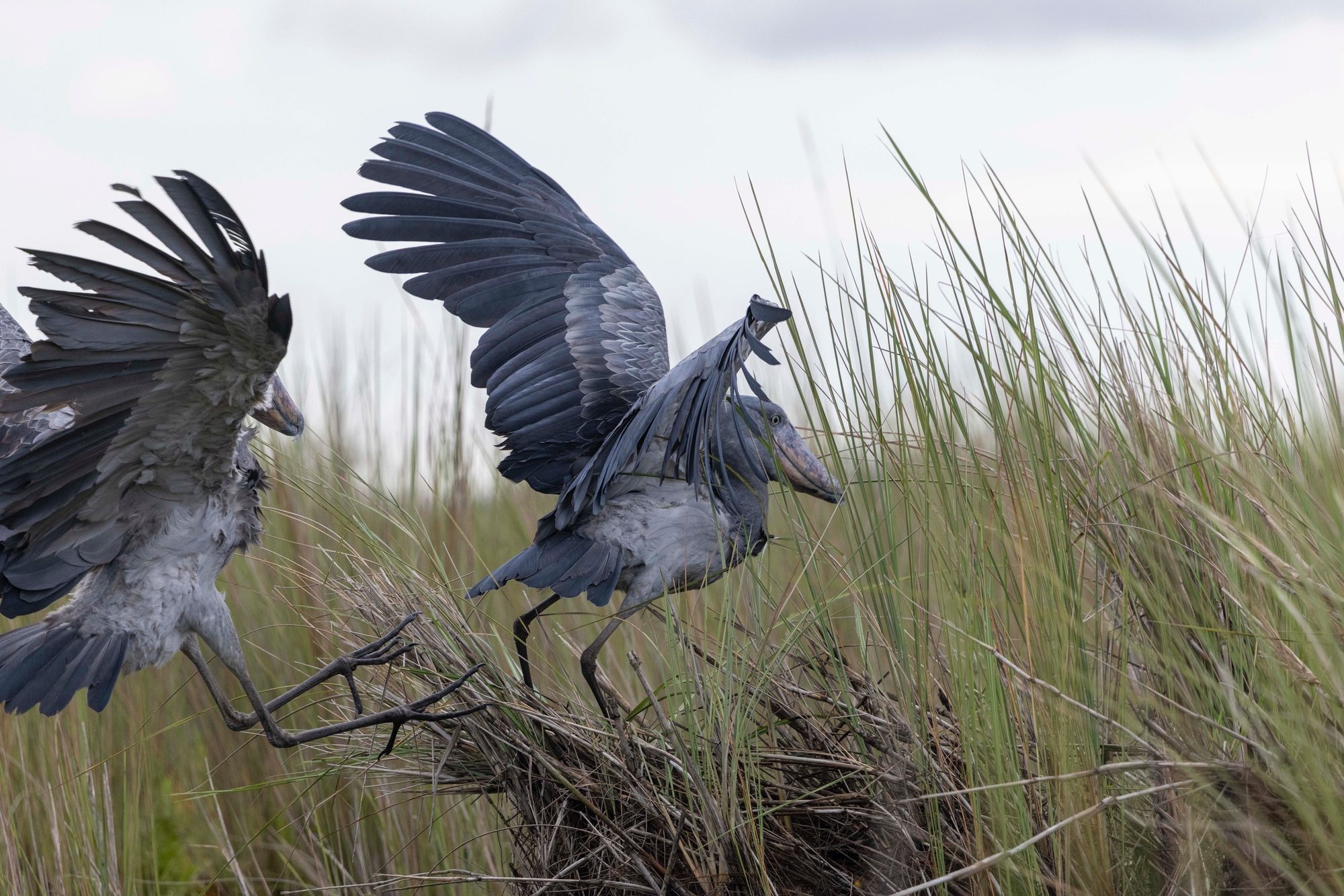
It is also a solitary bird. Our guide put it simply: when you meet two together, like we did, it means you have found a pair.
“Shoebills are solitary in nature. They stay alone. So when we meet two, like today, it means that's a couple.”
That solitude is part of why there are so few. A female usually lays two eggs, yet typically only one chick survives. Our guide explained why: as the chicks grow, they compete for food, and the stronger one wins.
The shoebill at a glance
- Height
- 1.1–1.5 m (3.5–5 ft)
- Wingspan
- about 2.4 m (8 ft)
- Diet
- lungfish, tilapia, eels, snakes
- Eggs and chicks
- about 2 eggs, usually 1 chick raised
- Left in the wild
- an estimated 5,000–8,000 worldwide; about 150 pairs in Uganda (IUCN, 2016)
- At Mabamba
- an estimated 10–15 birds, according to the local guides
From bad luck to boat captain
The most remarkable thing at Mabamba is not the bird. It is the people who now protect it.
Not long ago, our guide told us, the swamp's fishermen saw the shoebill as an omen. The Ramsar listing for Mabamba names fishermen entering the swamp and the poaching of shoebills among its concerns.
“They used to say, when you meet a shoebill, it's bad luck. So they could just turn them away.”
Then the community chose a different story. Local people called the fishermen together and talked about what the shoebill could bring to the village.
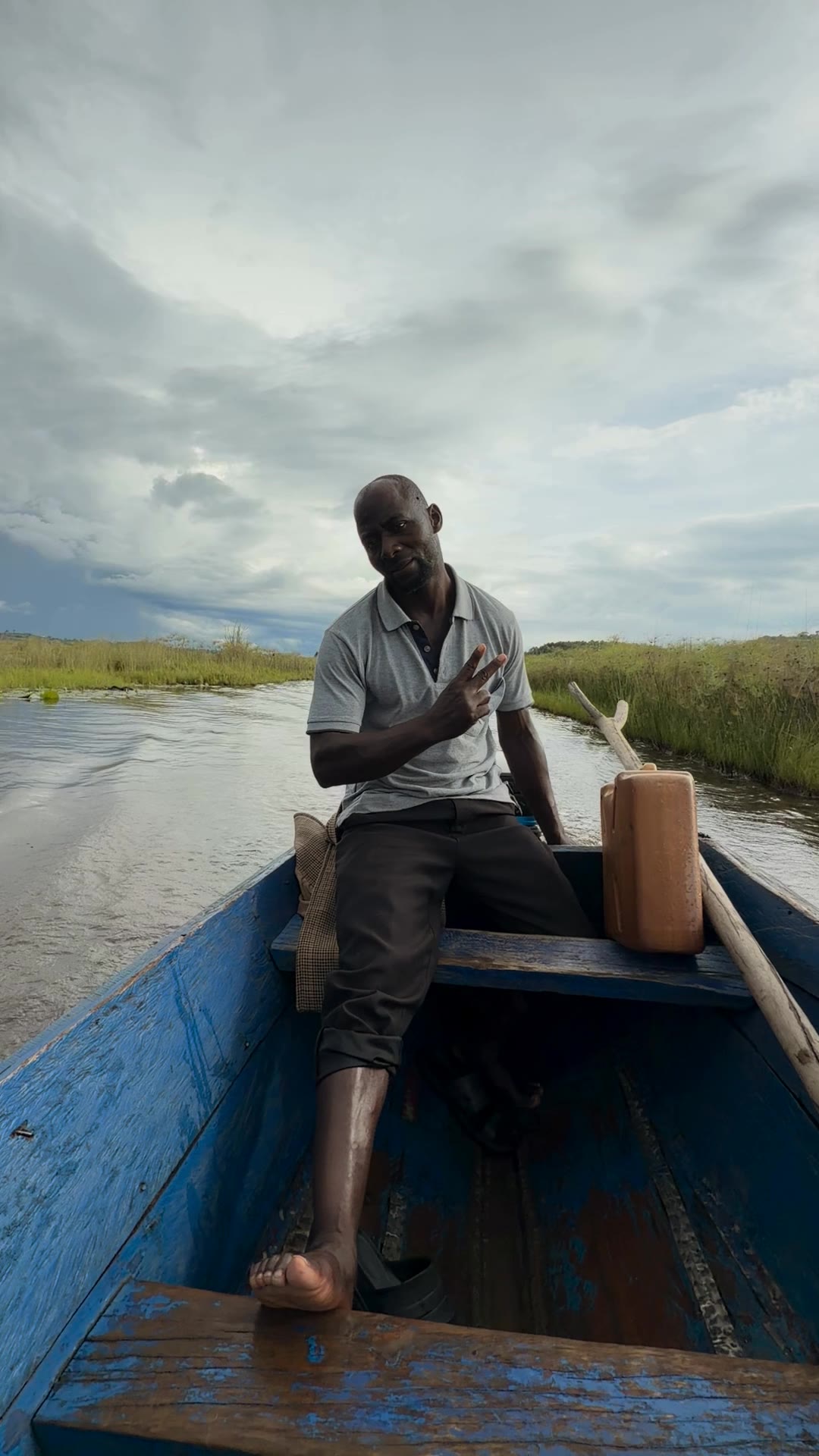
“Some of them, we made boat captains, others, local guides. So now we are one team. No more disturbing, no more killing shoebills. Now it's safe.”
That team is the Mabamba Wetland Eco-tourism Association, known as MWETA. Its members are fishermen, bird guides, farmers and craftswomen. With support from NatureUganda, they monitor the wetland's birds themselves.
The money visitors pay for a boat and a guide is what keeps a shoebill worth more alive than gone.
Hear it from Mabamba
Forty-nine seconds on the water, in our guide's own words.
What the swamp teaches
Most of a morning at Mabamba is waiting. The pole dips and lifts. The reeds close behind you. You stop talking without deciding to.
The shoebill has made a life out of stillness. Watching one, you start to notice how rarely you are still yourself, and how much you miss when you are not.
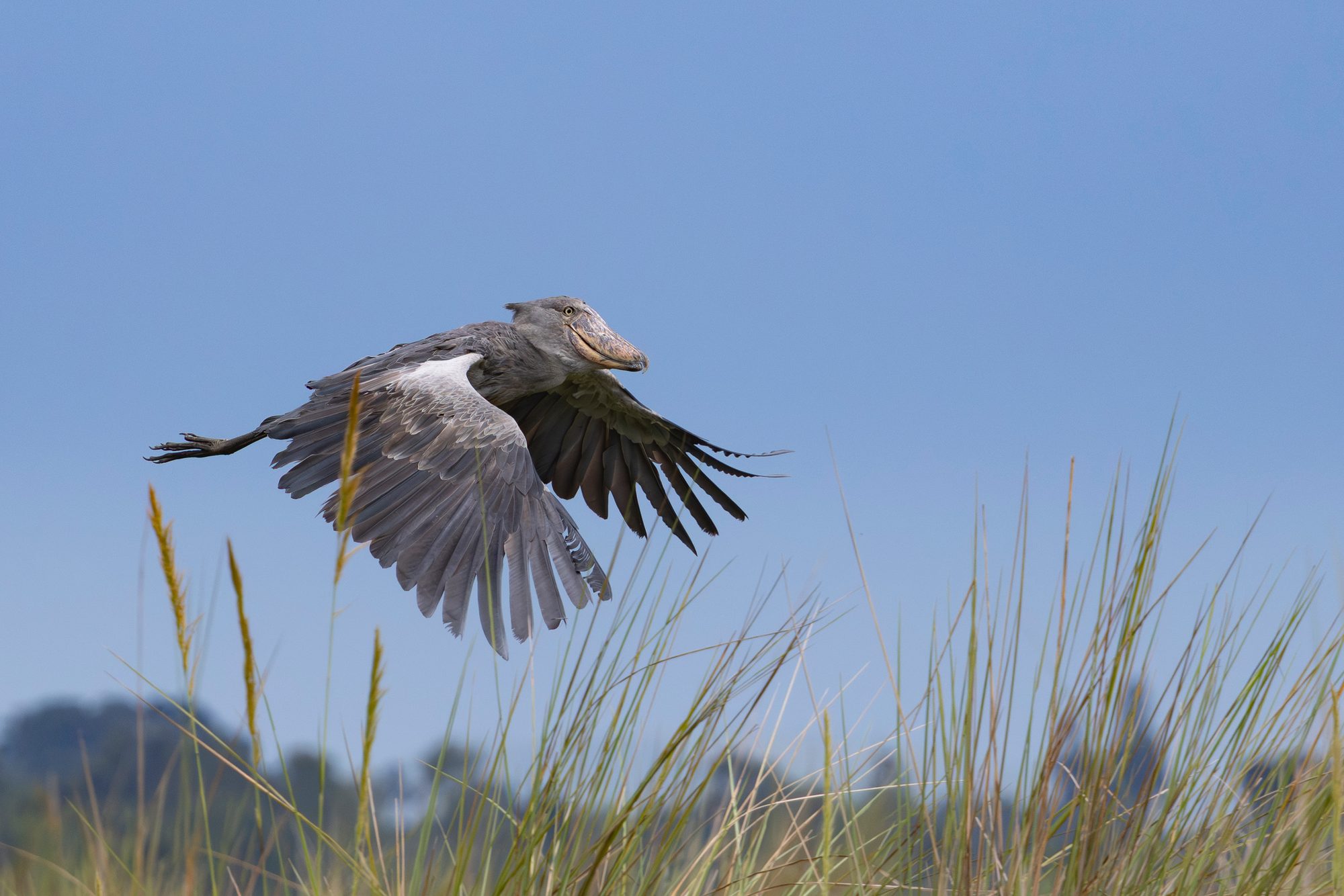
Then there is the other lesson, the one the community taught us. A bird once turned away as bad luck is now guarded by the people who feared it. Nothing about the shoebill changed. What changed was how people saw it.
That is what wild places do, when we give them time. They change how we see. The wilderness is the teacher.
Learn more
- NatureUganda: shoebill conservation and ecotourism at Mabamba Bay
- Mabamba Bay Wetland System (Ramsar site 1638)
- Shoebills: a source of livelihoods in Uganda
Wilderness Changes Us.